


Nature - 2019 August - Vol 572 No 7768
Publisher: Nature
Format: Paperback
ISBN: 9770028083095
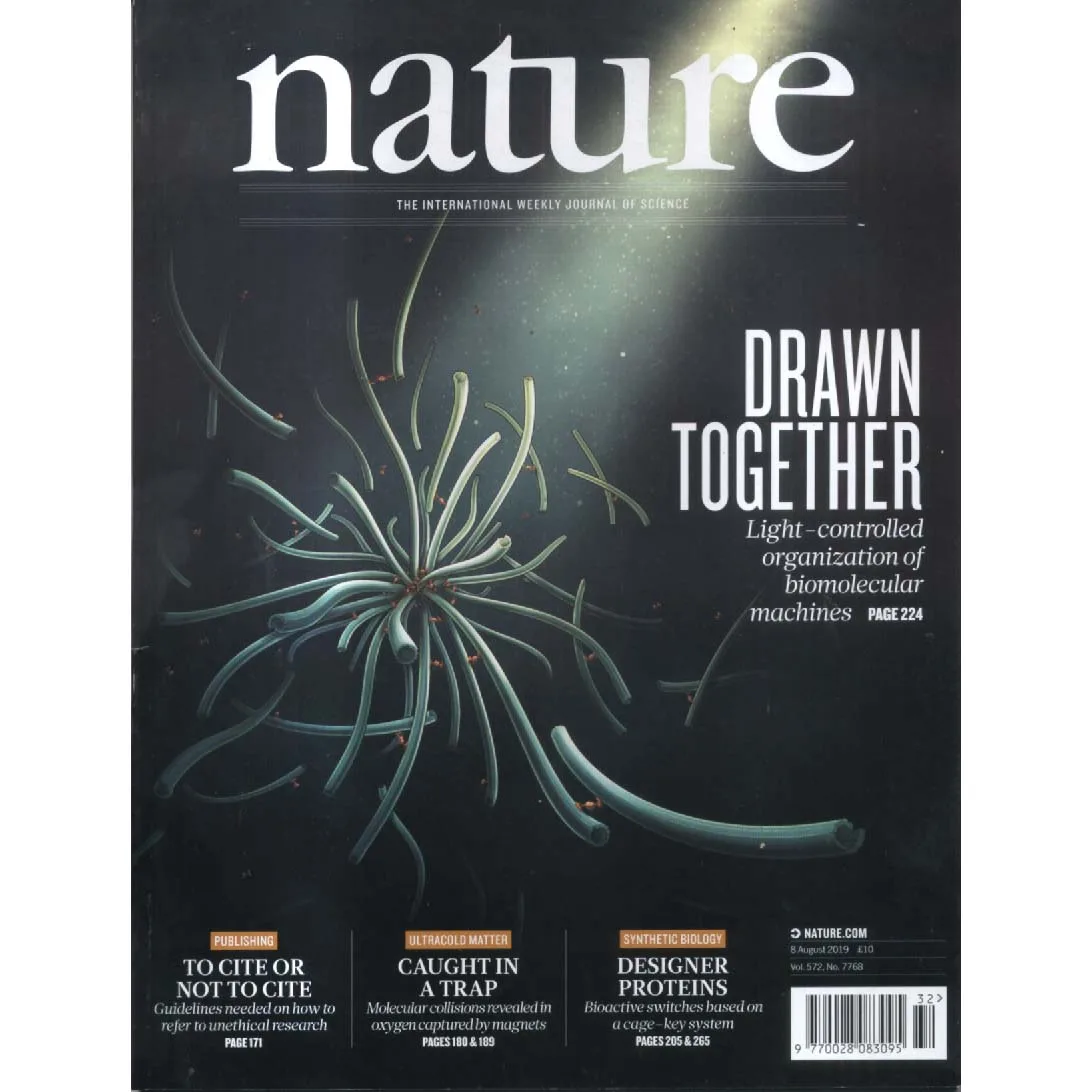
There is a very specific kind of confidence required to publish a magazine cover featuring glowing biomolecular spaghetti floating in darkness beneath the words “DRAWN TOGETHER”, and simply assume readers will nod thoughtfully rather than ask whether this is concept art from a science-fiction film. Yet this is Nature – August 2019, Vol. 572 No. 7768, where the boundaries between advanced science and futuristic hallucination have become pleasingly difficult to distinguish.
The lead feature concerns the light-controlled organisation of biomolecular machines, which sounds exactly like the sort of thing humanity should perhaps discuss a little more cautiously. Somewhere inside this issue are researchers calmly manipulating microscopic biological systems with beams of light while the rest of us are still trying to remember passwords. It is both deeply impressive and faintly alarming — classic Nature territory.
The cover artwork itself resembles a bioluminescent deep-sea creature attempting interpretive dance in outer space. It is magnificent. One suspects the art department was given the instruction: “Make molecular engineering look beautiful, mysterious, and slightly capable of ending civilisation,” and absolutely delivered.
Elsewhere in the issue, matters become no less surreal. Scientists are colliding molecules in trapped oxygen, synthetic biologists are designing proteins like bespoke furniture, and publishing experts are debating whether unethical research should still be cited. Few magazines can move from quantum-level collisions to academic ethics in the space of three pages while maintaining the same calm editorial tone usually associated with garden catalogues.
And that is the eternal joy of Nature. It treats every astonishing scientific leap with extraordinary composure. “Designer proteins based on a cage-key system,” it says politely, as though readers encounter bioactive molecular switches every day on the commute to work. There is something almost heroic about this refusal to become melodramatic while documenting humanity steadily acquiring powers once reserved for fictional supervillains.
Naturally, owning a copy of Nature also projects a very particular image. It implies someone deeply engaged with the frontiers of knowledge, possibly capable of explaining biomolecular assembly over coffee. In reality, many owners mainly use the magazine as a decorative reminder that clever people somewhere are definitely handling things. Whether they are handling them responsibly remains an open question explored somewhere around page 171.
This August 2019 issue now feels especially evocative of that late-2010s scientific mood: a period of accelerating breakthroughs where biology, computing, chemistry, and engineering all began merging into one increasingly futuristic blur. Reading it today carries the strange sensation that humanity was quietly building tomorrow while most people were busy arguing online about entirely different things.
Condition is listed as Good, meaning this copy has survived the traditional hardships faced by elite scientific publications: overloaded university bags, late-night “I really should understand this” reading attempts, coffee rings dangerously close to peer-reviewed research, and prolonged shelf life in homes belonging to ambitious former science students.
An excellent issue for science enthusiasts, futurists, molecular biology fans, or anyone who enjoys magazines that casually suggest we are slowly learning how to program matter itself while maintaining impeccable typography throughout.
Keep browsing: See more Nature Journal books Other books by Nature
